
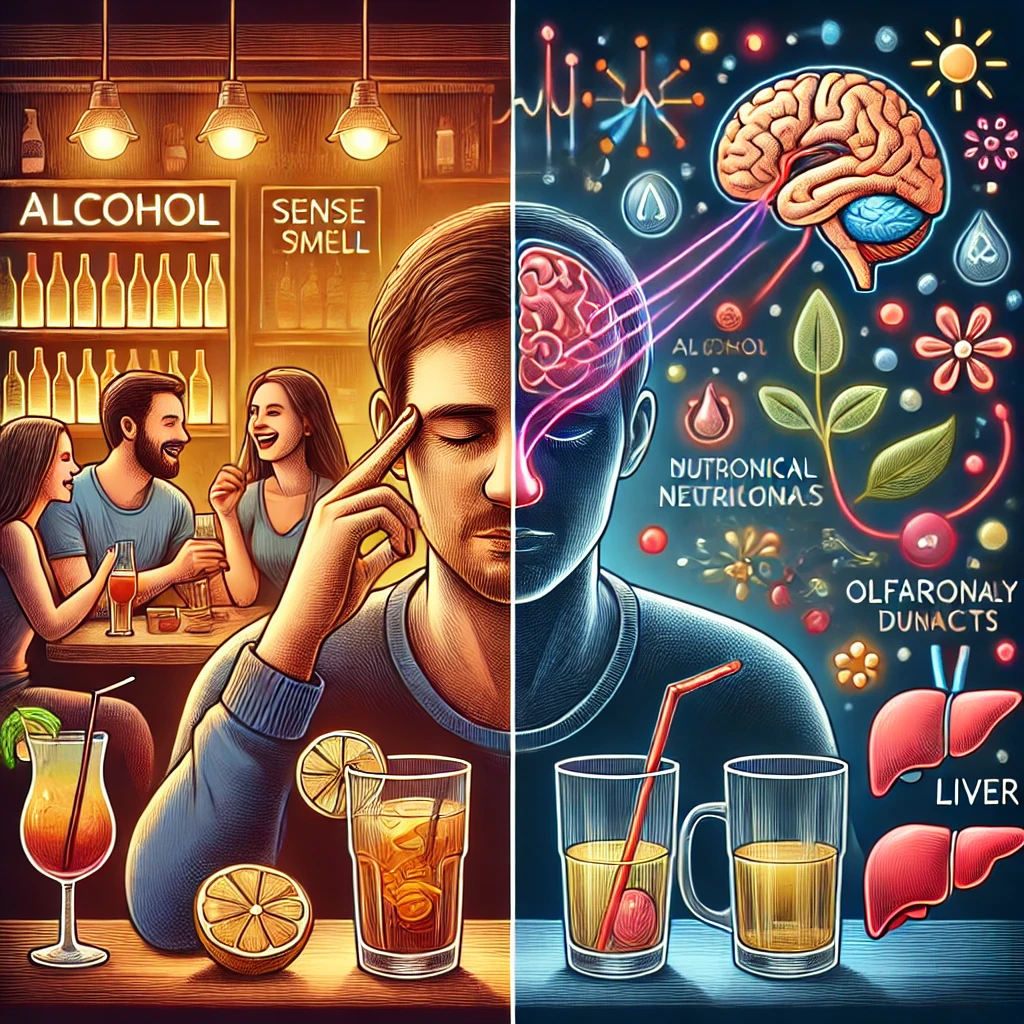
A Night Out with a Hidden Consequence
Imagine a typical weekend evening out, enjoying drinks with friends at a cozy bar. The air is filled with laughter, music, and the distinct aromas of various cocktails and spirits. As the night unfolds, glasses clink, and drinks are enjoyed, few would suspect that amidst this sensory experience, one’s sense of smell might be subtly deteriorating.
Initial Reactions: The Immediate Effects of Alcohol
As the first sips of alcohol touch your lips, the journey of impact begins. High-proof beverages, while savored for their bold flavors and warmth, can irritate the delicate mucous membranes in your nose. This irritation can trigger inflammation, a natural bodily reaction, but one that swells the nasal passages and dulls your olfactory senses. Initially, you might not notice as you’re engrossed in lively conversations, but your nose is starting to react.
The Morning After: Feeling the Aftereffects
The morning after brings the all-too-familiar dryness and congestion. Alcohol, a potent diuretic, leads to dehydration, which not only causes headaches and a parched mouth but also dries out the nasal passages. This dehydration impairs the nose’s natural ability to trap and identify odors. You wake up to find that your coffee doesn’t smell as rich or your breakfast as appetizing.
Long-Term Visitors: Chronic Effects Creep In
For those who regularly partake in excessive drinking, the story takes a more concerning turn. Chronic sinusitis may become a frequent complaint, marked by persistent inflammation and infection of the sinuses that significantly impairs the sense of smell. In some, an even more direct response known as alcohol-induced rhinitis develops, where alcohol consistently triggers sneezing, runny nose, and a reduced sense of smell almost akin to an allergic reaction.
The Invisible Damage: Neurological and Systemic Impacts
Behind the scenes, alcohol might be causing more insidious damage. Over time, excessive alcohol use can be neurotoxic, potentially harming the olfactory nerves and the brain areas responsible for processing scents. This neurological impact is often silent and unnoticed until the ability to smell starts to fade, an ability once taken for granted.
Additionally, liver disease and nutritional deficiencies—common companions of chronic alcohol misuse—can further diminish olfactory function. The liver’s struggle to filter toxins affects overall health, including that of the nasal passages and sense of smell.
Reclaiming Control: Moderation, Alternatives, and Awareness
This narrative isn’t just a cautionary tale but a call to awareness and moderation. Understanding the subtle ways in which alcohol can affect our senses, particularly our precious sense of smell, is crucial. By moderating intake and staying informed, one can enjoy the social pleasures of drinking without sacrificing the subtle delights of a fragrant world.
As the next weekend approaches, consider this unseen impact of alcohol. Perhaps choose to savor your drink a little more slowly, opt to replace every other alcoholic drink with a non-alcoholic (NA) option, or even consider going full board with non-alcoholic choices. This approach not only preserves your sensory experiences but also promotes a healthier lifestyle, ensuring that your ability to enjoy such moments remains intact for all your days to come.



Leave a Reply